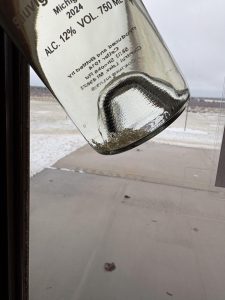
“Ummmm excuse me… There is something at the bottom of my glass, can I get a different one?”
Yes… I’ve heard this, even after they have drank the whole glass. One person even asked if she could get a refund after they consumed the whole glass. Sorry people, you will find sediment at the bottom of most reds and even some whites. It’s called wine diamonds in most cases, sometimes it’s sediment from lees, sometimes its tannins. All of which if you consume you will die within seconds, your eyes bulge out and limbs start falling off one by one. I’ve seen it happen almost daily in the tasting room… Calm down… I’m just kidding. They are completely harmless and typically signs of high quality because the wine had less intervention done to it.
Wine diamonds as seen in the picture below are potassium bitartrate, same thing as cream of tarter. This wine, I know for a fact I did not cold stabilize it long enough. CS helps soften the palate and reduce acid from the wine naturally and helps clarify it even faster. A step we do here at 1914 with almost all of our wines. We typically throw them outside in the winter and let mother nature run its course. Looking for a cold snap in the low 20’s for 3-4 weeks and that should do the trick. Rack it off that and boom, clearer, softer wine, for free. Some reds I do not because I want that acidity in the wine, others I do to help drop acid. It’s honestly going to depend on flavor profile after I have racked the wine off of the lees.
The lees? What in the hell is lees? Lees is what happens during and after fermentation, dead yeast, grape skins, seeds & maybe a mouse or two drop to the bottom of the vat… Again, just kidding. Fermentation is a magical time in the winery. There are so many different smells and excitement in a vat going on, that you can literally see the yeast working. Raising CO2 to the top and exploding and everything else settling along with the yeast at the bottom. I believe I’ve posted a picture in the past of it. It’s a soupy mess and hard to clean. And yes, I taste the soupy mess every single year and wonder if I should have done a sur lie… That is when you let fermentation finish (no more sugar) and stir the lees around for a month or so to capture the flavor of it, typically full body, rich and creamy. Chardonnay is a prime example of that. Once done, bentonite is added to fine/clarify it, then filtered multiple times over to keep the haze/sediment out of it. But I have seen a few wineries starting to get away from that. Which is totally cool in any and all perspectives. It’s the winemakers choice on what we want to do with it.
Winemaking is fascinating because we can do whatever (well, to a certain extent) we want with that wine and sell it. Want to make it sweet, add sugar. Want to make it bolder, barrel age it. Want to soften the palate even more and get a creamy smooth finish. Run it through malolactic fermentation. There’s so much you can do and each year the grape offers something different. I remember years ago talking to Mark Johnson from Chateau Chantal when I first got into it. He told me “when you ferment a cherry, you know exactly the flavor profile you are going to get, but when you ferment a grape, it’s going to be something different nearly every time.”
Till next time
Cheers
Rob